Blogs

If you keep running the AWS instance, you will be paying $720 a month - whether you run a single video for a transcript or a few hundred - you will be paying for each hour the instance has been running. Even with this cost, you will not benefit the parallel computing, your files will run sequentially. Solution?
AI-driven applications for qualitative research are being developed at the speed of light, coming out so quickly that it’s difficult for researchers to keep up. Author Renée Hopkins looks at the current state of AI in qualitative market research and how it’s benefiting researchers.
Qualitative researchers play multiple roles simultaneously – moderator, analyst, insight-miner, client-service person, project-manager. While doing QDA yourself can be a robust and satisfying experience; it is definitely not the best use of your time when faced with such an array of demands.
Researchers manage the balance between speed and rigour in their qualitative research report writing process through several strategies and tools. The approach can vary depending on the project size, type, and specific client needs. Timelines play an important role, too. Sometimes, full report may not be required for decision-making. Researchers focus on ensuring that study findings do not lose their relevance by managing timelines. Exploratory studies might require more detailed analysis, while
Online Qualitative Research (OQR) is transforming how we gather and analyze consumer insights, making research more accessible, efficient, and insightful. Explore the benefits and applications of OQR in our in-depth guide.
2023 was a year of growth & inspiration for MyTranscriptionPlace & Flowres.io! We honed AI transcription, built a Research Hub for Zoom, & launched powerful analysis tools. Explore what we will be unveiling in 2024! #QDA #QualitativeResearch
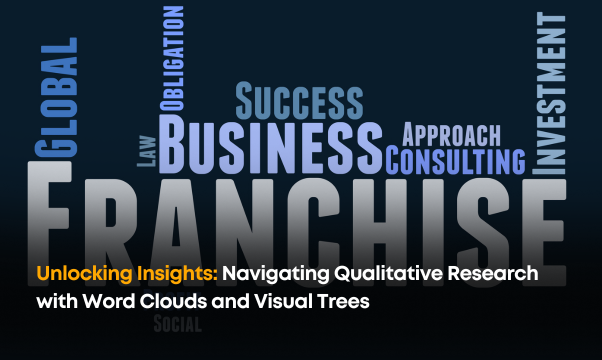
Reams of Qualitative data can get exhausting to sift through. We ran transcripts through complementary tools like Word Clouds and Visual Trees, to see how we could help Qualitative researchers analyze humungous data more efficiently.

How to use word clouds and visual trees to find key terms, understand context and build the story of your qualitative report
The debate of AI vs human beings seems to be settling. Its very clear that AI is here to augment the human beings not replace them. How can you work in tandem with Generative AI and make the best of both worlds? This article is an effort to deep dive into this question.
Automating QDA - the concluding blog of the series on Generative AI and QDA. Let's review what flowres is doing to automate the QDA process. I am going to close out this series on Generative AI and QDA (do I hear a collective sigh of relief??) by talking about different aspects of automating the qualitative research process in general, and the QDA process in particular.
Generative AI, as has been done to death already, offers a great opportunity for launching QDA into the next orbit. But what does it actually take, and how should you prepare, forms the basis of this series of blogs. In this blog, we explore the overwhelming need for a co-pilot emerging. That is, someone who understands the fast evolving AI space, can connect the dots from an applicability standpoint, is able to generate and analyze output, and can also understand the risks involved in using a
This blog explores AI Chatbots like ChatGPT and BARD for Exploratory Data Analysis of Qualitative Data. Since there are vast amounts of text involved, QDA exploration can be time consuming in traditional ways, plus very effort intensive. The blog outlines how this can be accomplished with some real-world examples. You will get to see prompts and output, some visualization and the works. Read on ...