Blogs
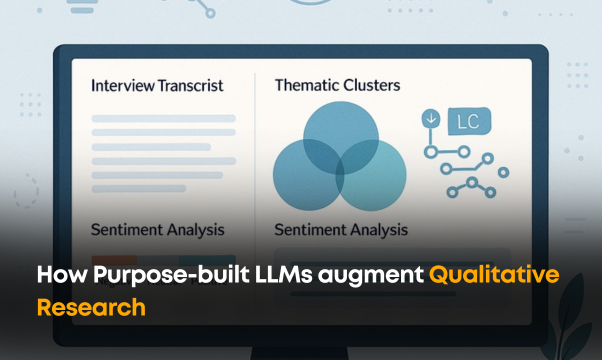
A quick read on under-the-hood applications of large language models (LLMs) in Qualitative analysis and reporting

As the conversation around Large Language Models (LLMs) rages on, here's a quick yet insightful read on why Qualitative Research workflows should not be relying solely on Generic LLMs.
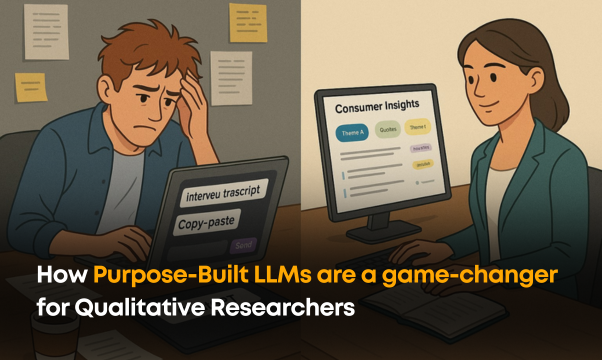
Plagued by GenAI jargon overdose? This post cuts through the clutter, giving you a clear perspective on GenAI x Qualitative Research. Read on to understand why using ChatGPT for your Qualitative data analysis isn't enough, in itself.
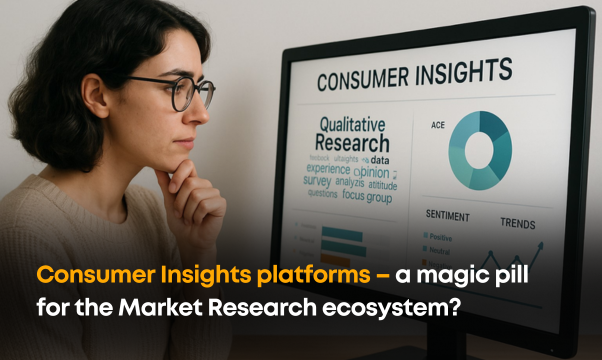
Should you even bother navigating the crowded, seemingly chaotic space that Consumer Insights platforms operate in? Here's a comprehensive PoV on why, why not, when, when not.

Possibly the earliest adopter of Consumer Insights, the CPG industry has heartily welcomed the advent of Consumer Insights platforms. In this quick read, learn what CPG brands value about platforms today.
Qualitative researchers often see clients miss the entire point of well-analyzed, detailed reports. Read on, to consider how you can adopt Reel-making, to bring credibility and impact to your insights delivery.
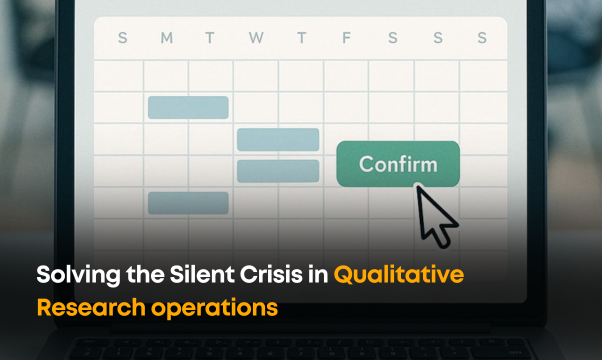
Scheduling conflicts and last-minute tech-glitches can sound the death-knell for a Qualitative Research consumer interaction. Thanks to tech, it is now possible to eliminate this pain point, from your operations. One-click scheduling streamlines Qualitative Research, turning logistical challenges into seamless interactions.
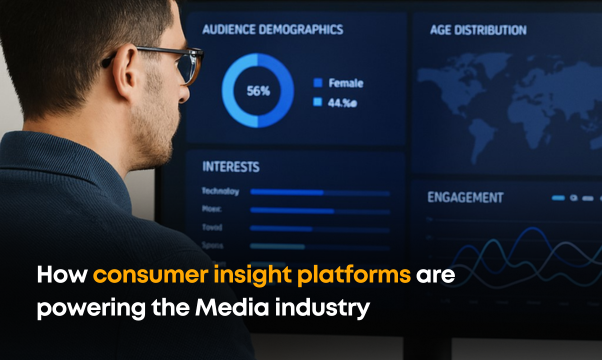
Media & Entertainment have discovered the potential of consumer insight platforms, to power their decision-making. Here's how.

Consumer insight platforms are not a new phenomenon. Yet, newer industries are discovering their potential, every day. Read on to see how companies use consumer insight platforms to up their insight-generation game.
Data Dumping to Collaborative Storytelling - how did we get here? Consumer Insights platforms can boast of an accelerated history, in the recent past. Read on, to discover how things evolved, from manual workflows to today's AI-enabled platforms.
Whether you're a solo consultant or part of a large insights team, it’s time to rethink how you do Qualitative Research. Read on to understand how to amplify the impact of your work.

Not enough has been said about the significance of backrooms in online market research. As user needs grow, online qualitative research backrooms are evolving to meet newer requirements. Read on, to see how technology has so far shaped the way backrooms contribute to insight-generation.